

Nasal Irrigator vs. Nasal Mist Sprayer: How to Choose

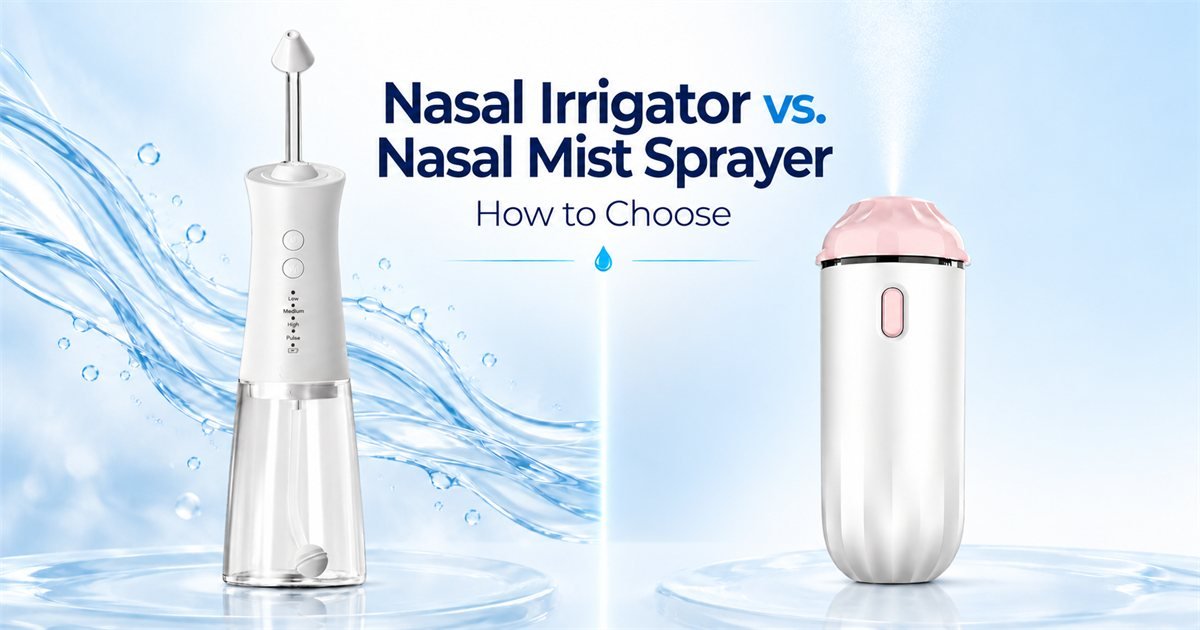
Nasal Irrigator vs. Nasal Mist Sprayer: What’s the Difference and Which One Fits Your Routine?

Nasal irrigators and nasal mist sprayers are both designed for nasal-care routines, so it is easy to assume that they do the same job.
They do not.
In simple terms, a nasal irrigator typically uses a larger volume of saline and a continuous flow to rinse the nasal passages. A nasal mist sprayer turns a compatible nasal-care liquid into a fine mist for a lighter, more portable application.
Neither option is automatically better. The right choice depends on what you want to do, where you plan to use the device, and how much preparation and cleaning you prefer.
Quick Comparison: Nasal Irrigator vs. Nasal Mist Sprayer
| Feature | Nasal Irrigator | Nasal Mist Sprayer |
|---|---|---|
| Delivery | Continuous saline flow | Fine, even mist |
| Typical capacity | Larger reservoir for a fuller rinse | Smaller reservoir for portable use |
| Common setting | At home, near a sink | Home, office, or travel |
| Preparation | Requires properly prepared saline | Requires a compatible nasal-care liquid |
| Experience | Higher liquid volume with adjustable flow | Gentle output with less liquid |
| Cleaning | Tank and nozzle must be washed and dried | Bottle and removable parts must be cleaned as directed |
What Is a Nasal Irrigator?
A nasal irrigator moves saline through the nasal passages. Common designs include neti pots, squeeze bottles, and electric irrigators with adjustable flow settings.
The U.S. Food and Drug Administration explains that fine-mist spray bottles may be useful for moisturizing dry nasal passages, while irrigation devices provide more substantial flushing of mucus, allergens, and debris. Correct use and cleaning remain essential.
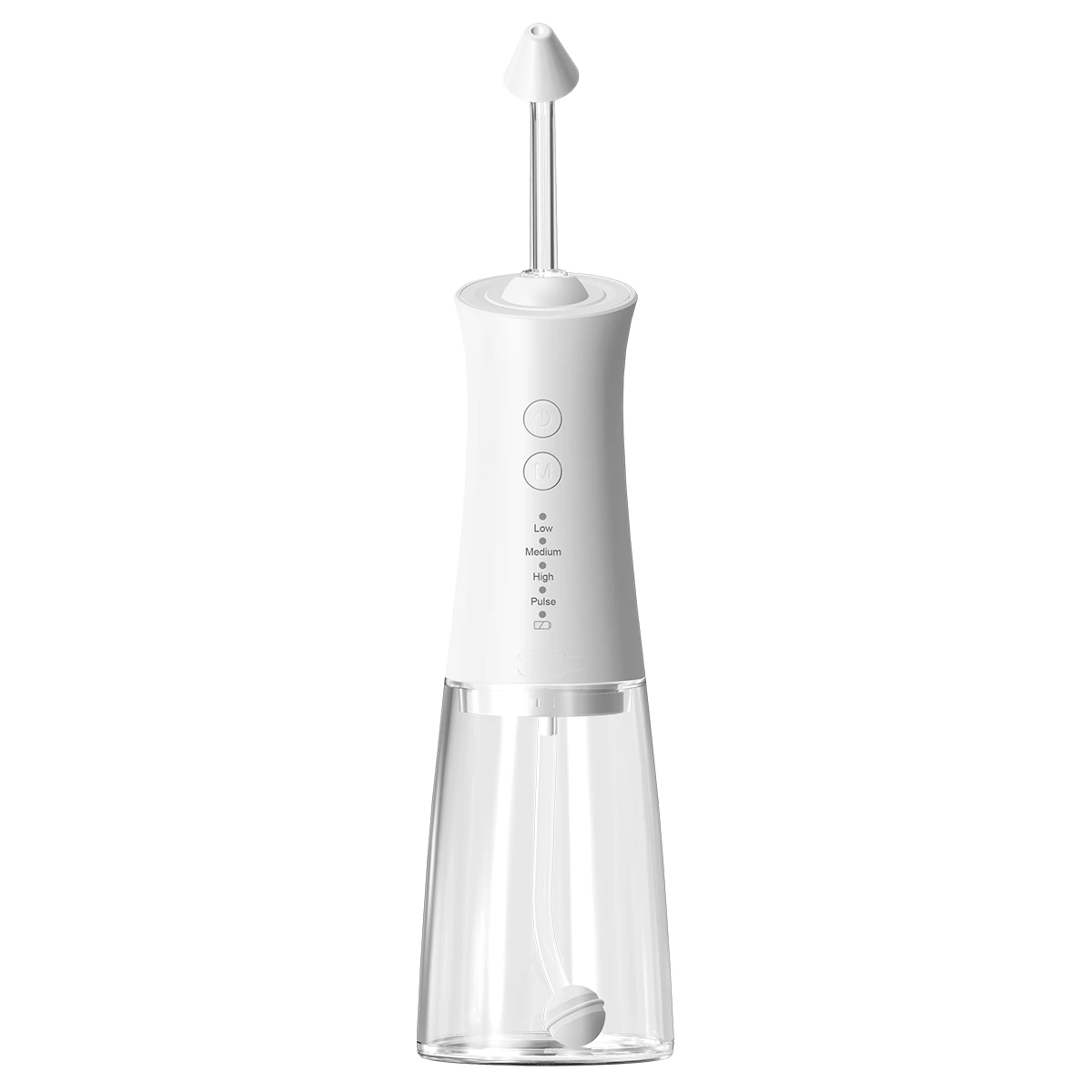
The RTT MEDI 300mL Electric Nasal Irrigator includes a detachable reservoir, four flow modes, a direct stream nozzle, and a softer mist-style nozzle. A first-time user can begin with the Low setting and adjust the flow according to comfort.
Its larger reservoir supports a more complete rinsing session. However, it also requires saline preparation and cleaning of the tank and nozzle after use. For that reason, an irrigator is generally more convenient at home or near a sink.
What Is a Nasal Mist Sprayer?
A nasal mist sprayer does not move a large volume of saline through the nasal passages. Instead, it uses an atomizing system to convert a compatible liquid intended for nasal use into a fine mist.
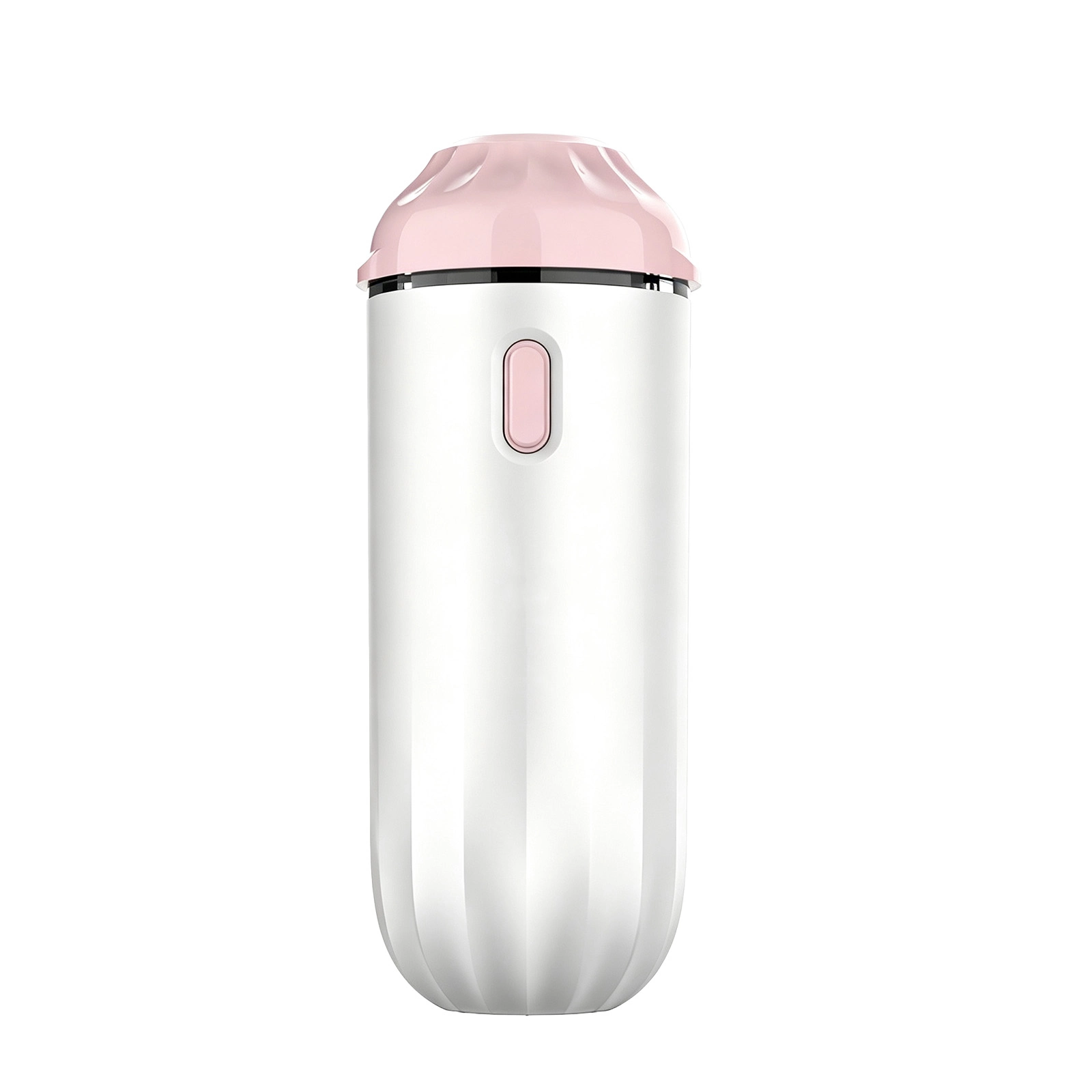
The RTT MEDI M15 Portable Nasal Atomizer uses ultrasonic micro-mesh atomization. The product is specified to produce an approximately 5μm mist and includes a removable 5mL bottle. Its compact rechargeable design makes it easy to store in a handbag, desk drawer, or travel kit.
Use only liquids clearly intended for nasal application and confirmed to be compatible with the device. Do not add essential oils, thick liquids, liquids containing particles, or unapproved medication.
Five Important Differences
1. Liquid Volume
A nasal irrigator generally uses a larger volume of saline so the solution can flow through the nasal passages. A mist sprayer uses much less liquid and focuses on producing an even mist.
2. Intended Routine
If you want a more complete saline-rinsing routine, a nasal irrigator may better match that goal. If portability and light fine-mist application are more important, a nasal mist sprayer may be more convenient.
3. Where You Use It
Nasal irrigation usually requires access to a sink and enough time to prepare saline, complete the rinse, and clean the device. A compact mist sprayer is easier to carry to the office or while traveling, although it should still be used and cleaned in a hygienic environment.
4. Level of Control
Electric nasal irrigators may provide several pressure or flow modes, allowing users to select a comfortable setting. Mist sprayers often use simple one-button controls and focus on consistent atomization.
5. Cleaning
Both devices require regular cleaning. With an irrigator, empty the remaining saline, wash the tank and nozzle, and allow washable parts to dry completely. With a mist sprayer, clean the bottle and removable components according to the instructions while keeping the main electronic unit away from water.
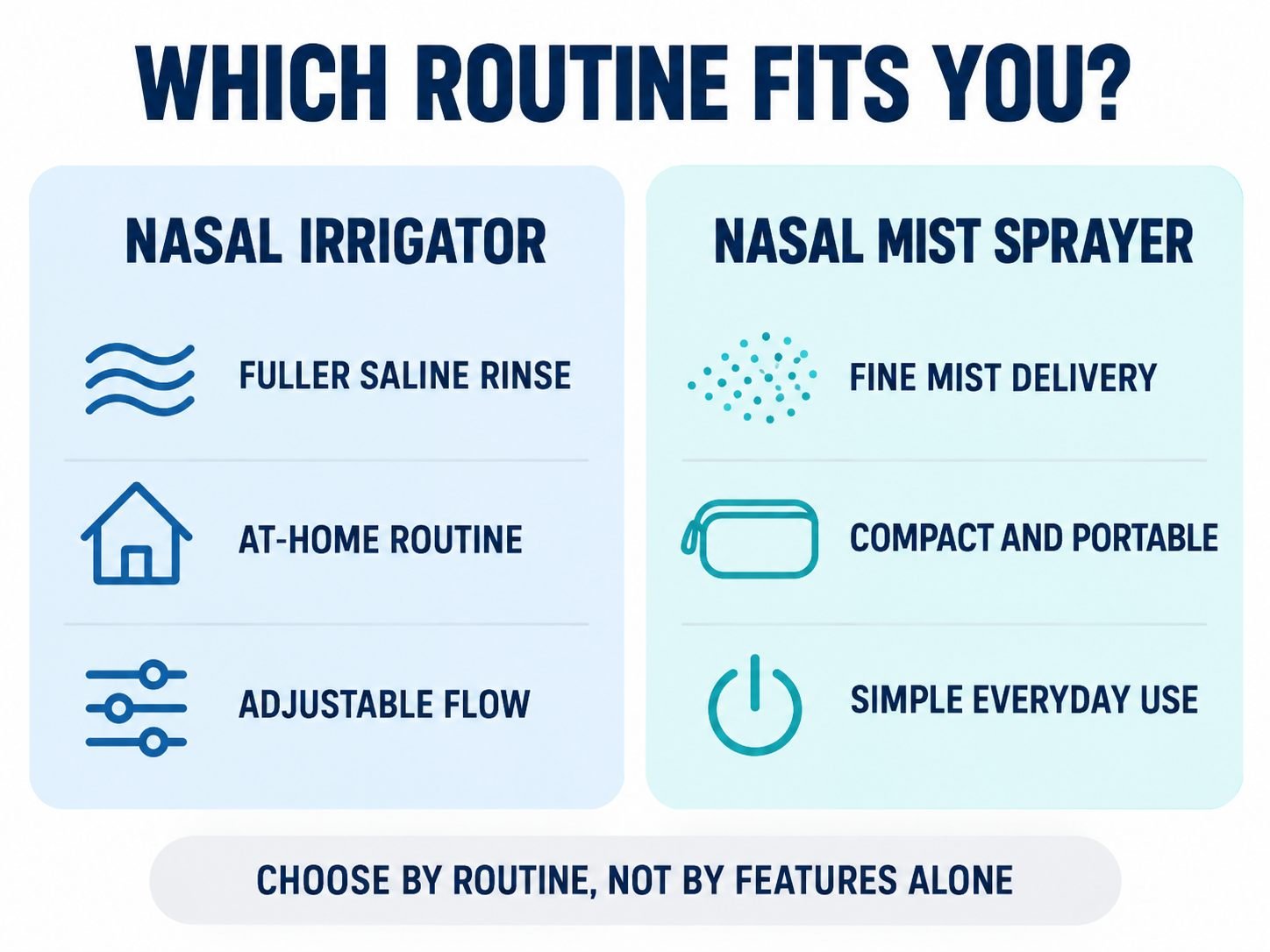
How Do You Choose?
Ask yourself:
- Do I want a fuller saline rinse or a light fine-mist application?
- Will I mainly use the device at home or carry it with me?
- Am I comfortable preparing saline and cleaning a larger reservoir?
- Do I value adjustable water flow or compact portability?
- Is the liquid I plan to use intended for nasal application and compatible with the device?
For a more complete at-home rinsing routine, consider a larger electric nasal irrigator with adjustable modes. For a compact option focused on fine-mist delivery, a portable nasal atomizer may fit more naturally into your routine.
Safe Water Matters More Than the Device You Choose
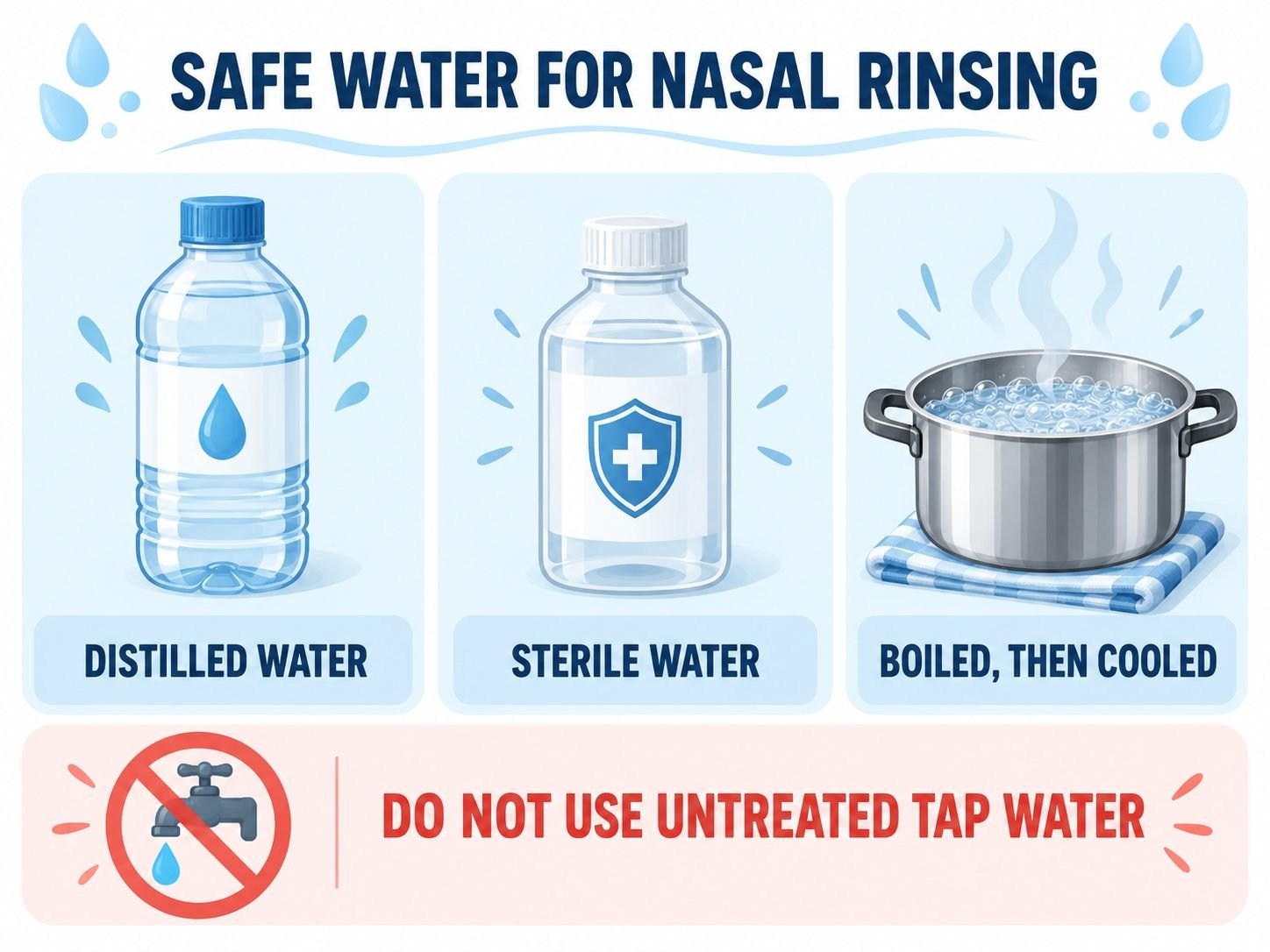
The U.S. Centers for Disease Control and Prevention recommends using water labeled distilled or sterile, or tap water that has been properly boiled and allowed to cool.
Additional precautions include:
- Prepare saline according to the product or saline manufacturer’s instructions.
- Begin with a low setting when using an electric irrigator for the first time.
- Do not insert the nozzle deeply.
- Discard unused solution after the session.
- Wash removable parts and allow them to dry completely.
- Do not share nasal-care devices or nozzles.
People who recently had nasal surgery, experience frequent nosebleeds, have completely blocked nasal passages, have a weakened immune system, or develop significant pain, fever, headache, or worsening symptoms should stop and seek professional medical advice.
The Bottom Line
A nasal irrigator and a nasal mist sprayer serve different roles and may not be interchangeable.
An irrigator emphasizes higher-volume saline flow and adjustable rinsing. A mist sprayer emphasizes fine-mist delivery, portability, and convenient everyday use.
Instead of choosing by specifications alone, consider your care goal, where you will use the device, your cleaning preferences, and the type of liquid involved.
Explore Nasal-Care Options
Compare the two routines and choose the format that fits your day.
View the Electric Nasal Irrigator View the M15 Nasal AtomizerThis article provides general care information and is not a substitute for medical diagnosis or treatment.