Uncategorized

After the Ear Clips Are in Place: Making the HE-M012 a Consistent Bedtime Cue

At the end of the day, the body may already be in the bedroom while the mind remains occupied with work, messages and tomorrow’s plans. The more we tell ourselves that we must fall asleep immediately, the more attention may shift toward the question, “Why am I still awake?”

A consistent bedtime action cannot control sleep, but it can help separate the day from the night. The most suitable role for the HE-M012 may not be as a device that “treats insomnia,” but as the beginning of a relaxation routine.

Begin by Letting the Hands Relax

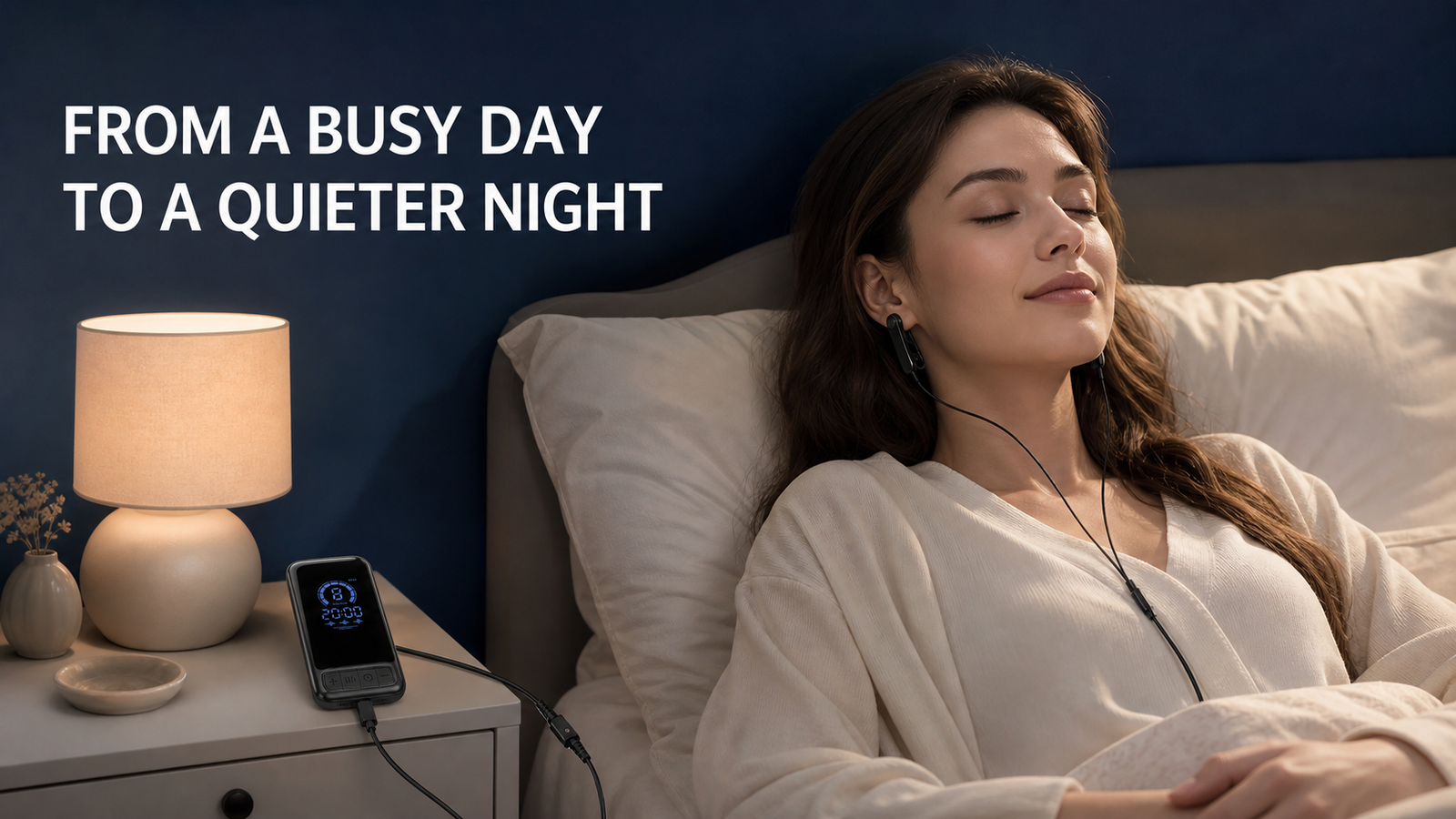
The HE-M012 includes a portable controller and a pair of wired ear clips. The display on the front presents information such as session time and intensity, while the physical buttons below it allow the settings to be adjusted.

Position the clips on the earlobes according to the instructions. The supplied product information advises moistening the electrode pads with physiological saline before use. Once the clips are in place, the hands do not need to hold the device and can rest naturally beside the body or on the bedding.

The main practical difference of the ear-clip design is that it can make the relaxation period quieter and simpler. The device cannot force the brain into sleep, however, and it should not be understood as something that is guaranteed to work after every session.

Do Not Judge It After One Night

Sleep can be affected by stress, caffeine, exercise, room temperature and changes in schedule. One night’s experience therefore cannot provide the complete picture.

Keep a simple record for one or two weeks. Note approximately how long it takes to fall asleep, whether you wake frequently and how restored you feel the following day. If no consistent change appears, do not respond simply by continuing to increase the intensity. Review the instructions and sleep habits, and consider whether the underlying problem requires professional assessment.

Research on CES suggests possible value for relaxation and sleep support, but the evidence remains inconsistent and does not establish that the HE-M012 will work for everyone. Moderate expectations are more realistic than promises of immediate deep sleep.

Put Safety Before Sleepiness

Do not attach the clips to damaged, inflamed or visibly irritated skin. Stop using the device if you experience pain, burning, dizziness, headache or persistent discomfort.

People with cardiac pacemakers or other implanted electronic medical devices should follow the listed contraindications and consult a doctor before use. Do not operate the device in a humid environment or attempt to disassemble or modify the controller or clips.

Persistent insomnia, significant daytime fatigue, severe snoring or pauses in breathing during sleep should not be managed solely with a sleep-support device. CBT-I remains the better-supported first-line treatment for chronic insomnia.

The HE-M012 cannot decide when you will fall asleep. What it can provide is a repeatable action: put down the phone, position the ear clips, slow the pace and allow the day to end quietly.


From Our Collection

Explore practical health technology designed around everyday comfort. From rechargeable hearing aids with convenient app controls to compact in-ear models with DSP noise reduction, our collection offers flexible options for different listening needs. You will also find an adjustable ear-clip sleep-support device that can be incorporated into a personal evening relaxation routine.

Leave a Reply

Your email address will not be published. Required fields are marked *