Uncategorized

One More Quiet Step Before Bed: A Guide to the HE-M012 Ear-Clip Sleep Aid

Sleep does not always begin as soon as the lights go out. Unfinished work, constantly updated information and the pressure to “fall asleep earlier tonight” can leave the body in bed while the mind remains busy.

A useful bedtime routine does not force sleep. Instead, it gradually reduces stimulation and gives the body a clear signal that the day is coming to an end.

A Dual Ear-Clip Tool for the Bedside

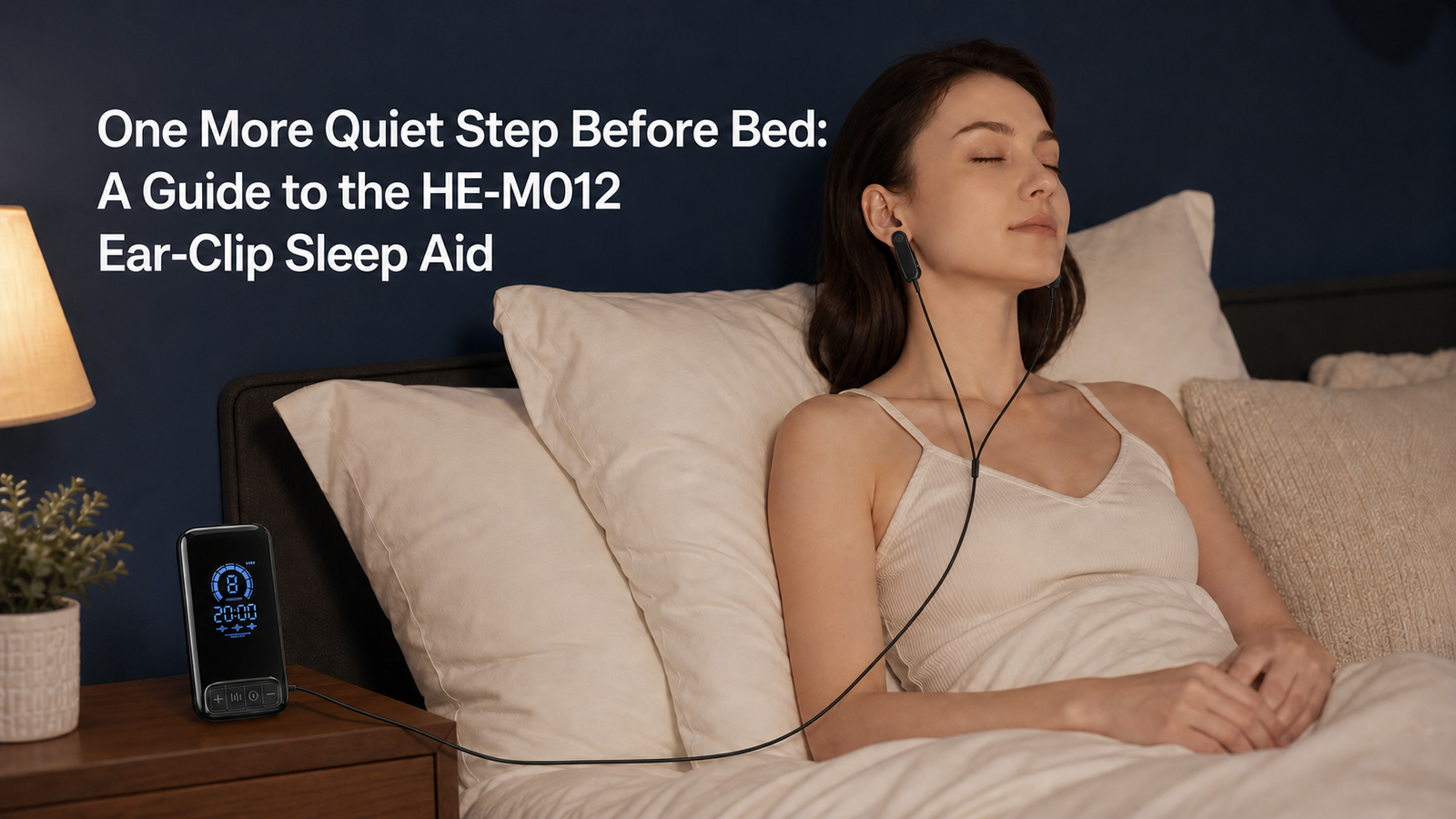
The HE-M012 is a sleep-support device consisting of a portable controller and a pair of wired ear clips. Its visible features include a black rounded body, a front display and four physical buttons for increasing the intensity, selecting a mode, setting the timer and reducing the intensity.

During use, one clip is positioned on each earlobe. The supplied product images advise moistening the electrode pads with physiological saline before use to support appropriate contact. Follow the HE-M012 manual for the correct connection method, operating mode, intensity and session length.

The ear-clip design allows the hands and body to remain relaxed. Even so, the device is better understood as a cue that it is time to prepare for rest—not as a switch that guarantees sleep. Some users may notice a mild sensation, while others may feel very little. Experiences can vary.

Add One Quiet Step Before Bed

Begin by dimming the lights, setting the phone to Do Not Disturb and placing it somewhere that is not easy to reach. Confirm that the skin around the earlobes is clean and intact, without visible irritation, damage or inflammation. Connect the controller and position the clips as instructed.

For the first session, begin at the lowest comfortable intensity and adjust it gradually. The sensation should remain mild. Increasing the intensity unnecessarily does not guarantee that sleep will come more quickly.

Allow the shoulders to relax and try slow breathing: inhale for four seconds and exhale for six. There is no need to empty the mind. When your attention returns to work or another concern, gently bring it back to the rhythm of your breathing.

At the end of the session, switch off the device and remove the clips. Continue with a quiet activity such as reading a printed book, listening to calm music or turning off the lights. Repeating a similar sequence each evening can help it become a consistent signal that the day is over.

After one or two weeks, note approximately how long it takes to fall asleep, how often you wake during the night and how alert you feel the following morning. These observations are usually more informative than judging the device after a single night.


Understanding the Scientific Limits of CES

The product materials describe the HE-M012 as a CES microcurrent device. CES generally involves delivering a low-intensity electrical current to the head through electrodes positioned on or near the head or ears. The FDA classifies CES devices intended for insomnia or anxiety as Class II medical devices. This category does not establish that every ear-clip product has completed the applicable review, and it does not replace model-specific regulatory and clinical documentation for the HE-M012. FDA product classification

Research on CES and insomnia has not produced entirely consistent results. A systematic review concluded that the available evidence was insufficient to establish a clinically important effect on insomnia, with limitations including small studies and short follow-up periods. Systematic review of CES

The microcurrent concept and advertising images alone therefore do not establish that the HE-M012 “corrects brainwaves,” increases melatonin, guarantees deep sleep or cures insomnia. A more accurate description is that it may be considered an optional part of an adult bedtime relaxation routine, with no guaranteed individual result.

For long-term insomnia, cognitive behavioral therapy for insomnia—CBT-I—remains a better-supported first-line option. It combines approaches such as sleep education, cognitive strategies, relaxation and sleep-schedule management. NIH insomnia treatment guidance

Safe Use Matters Too

Follow the product manual carefully. Do not attach the clips to allergic, damaged, blistered or inflamed skin. Stop using the device if it causes pain, persistent stinging, burning, dizziness, headache or significant skin irritation.

People with cardiac pacemakers or other implanted electronic medical devices should not use it without medical approval. Keep the device away from high-humidity environments such as bathrooms, and do not disassemble, repair or modify it without authorization.

Seek professional assessment if sleep problems persist, interfere with daytime life, or occur alongside severe snoring, pauses in breathing during sleep, chest discomfort or major changes in mood.

The HE-M012 cannot replace healthy sleep habits or professional care. Its most realistic role is to add one quiet step between work, screens and sleep—helping the user slow down and bring the day to a calmer close.

From Our Collection

Explore practical health technology designed around everyday comfort. From rechargeable hearing aids with convenient app controls to compact in-ear models with DSP noise reduction, our collection offers flexible options for different listening needs. You will also find an adjustable ear-clip sleep-support device that can be incorporated into a personal evening relaxation routine.

Leave a Reply

Your email address will not be published. Required fields are marked *