

Why Do I Keep Waking Up at 3 A.M.?


Waking up in the middle of the night can be frustrating—especially when it happens at almost the same time every night. You may start wondering whether your body is trying to warn you about something.
The reassuring answer is that waking at 3 a.m. does not point to one specific illness. However, frequent awakenings can sometimes reflect stress, sleep habits, environmental disturbances, medication effects, or an underlying sleep or health condition.
Is Waking Up at 3 A.M. Normal?
Sleep is not one continuous state. During the night, your brain moves repeatedly through light sleep, deep sleep, and rapid eye movement—or REM—sleep. Because sleep becomes lighter at different points in these cycles, brief awakenings can occur without indicating a medical problem.
The important questions are:
How often does it happen?
How long are you awake?
Can you fall asleep again?
Do you feel rested the next day?
An occasional awakening that does not affect daytime life is usually less concerning than a pattern that leaves you exhausted, irritable, or unable to concentrate.
Common Reasons You May Wake Up During the Night
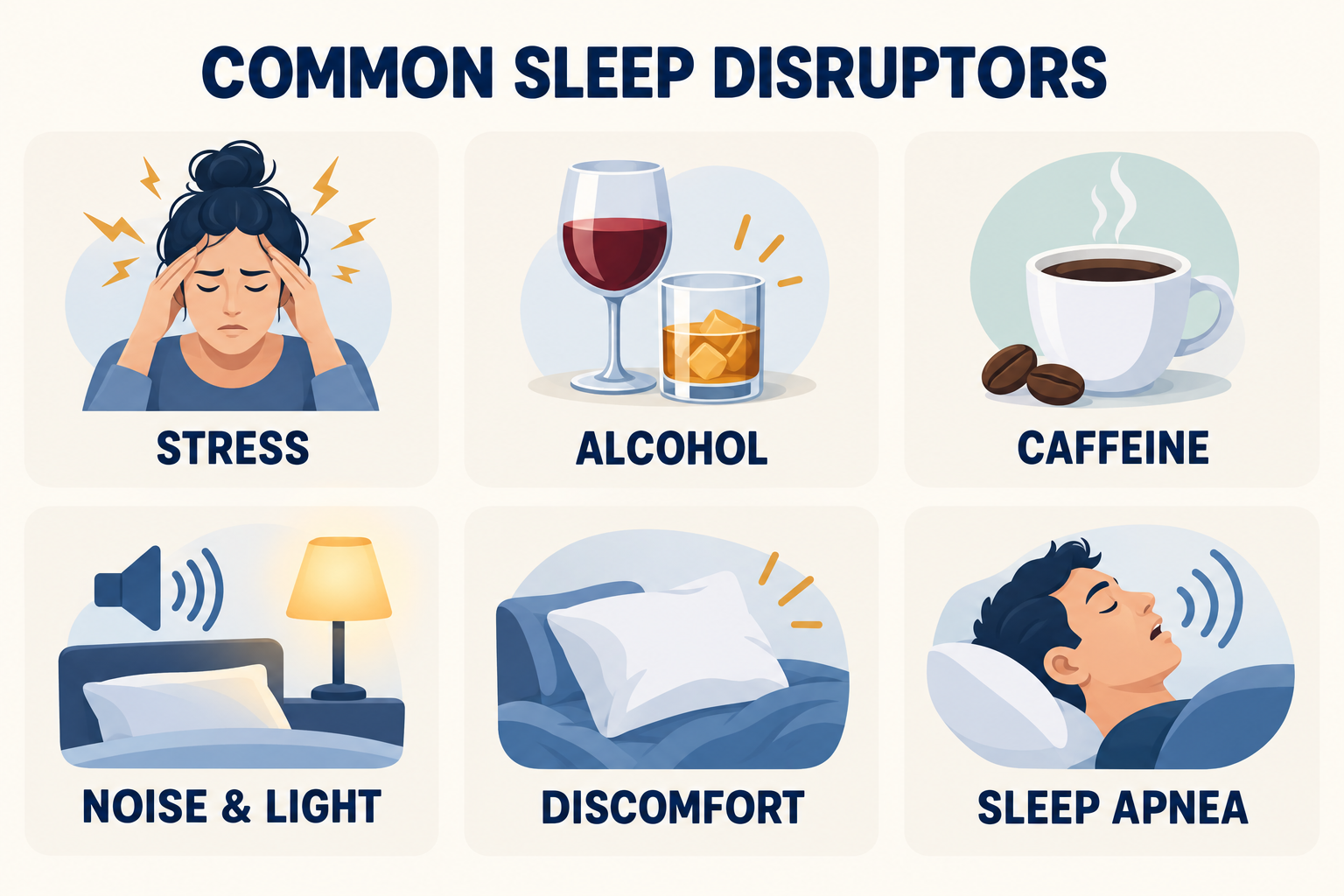
1. Stress and an Overactive Mind
Work pressure, relationship concerns, financial worries, or anxiety about sleep itself may keep the nervous system alert. Looking at the clock and calculating how many hours remain can increase that alertness and make returning to sleep more difficult.
2. Alcohol, Caffeine, or Nicotine
Alcohol may make you feel sleepy initially, but it can produce lighter, more fragmented sleep later in the night. Caffeine and nicotine can also interfere with sleep, particularly when used later in the day.
3. Light, Noise, and Temperature
Streetlights, phone notifications, a warm bedroom, pets, or changes in background noise may be enough to wake a light sleeper. Even when you do not fully remember these disturbances, they may reduce sleep quality.
4. Physical Discomfort
Pain, acid reflux, hot flashes, nasal congestion, or needing to urinate can interrupt sleep. Drinking large amounts of fluid close to bedtime may also contribute to nighttime bathroom visits.
5. Changes in Schedule or Body Clock
Shift work, travel, inconsistent bedtimes, late naps, and large differences between weekday and weekend schedules can disrupt the body’s sleep-wake rhythm.
6. A Possible Sleep Disorder
Frequent awakenings may sometimes be associated with insomnia, sleep apnea, restless legs syndrome, or another sleep disorder. Loud snoring, gasping, choking during sleep, morning headaches, or excessive daytime sleepiness deserve particular attention.
What Can You Do Tonight?

Start with a few simple changes:
Avoid checking the time repeatedly. Turn the clock away and keep your phone out of reach.
Keep the room cool, dark, and quiet.
Use a consistent wake-up time, including on weekends.
Limit caffeine later in the day and avoid alcohol close to bedtime.
Create a calm wind-down routine with reading, soft music, breathing exercises, or a warm shower.
If you are fully awake, stop forcing sleep. Move to a dim, quiet space and return to bed when you feel sleepy.
Keep a sleep diary for one to two weeks. Record bedtime, awakenings, caffeine or alcohol use, exercise, medications, and how you feel the next day.
How to Build a More Stable Sleep Routine

Improving sleep does not require changing everything at once. Choose one or two habits and follow them consistently for at least seven nights.
Keep a consistent wake-up time. Try to wake at approximately the same time every day, including weekends.
Get natural light after waking. Morning light and regular daytime activity can help support the body’s sleep-wake rhythm.
Review caffeine and alcohol habits. Avoid caffeine late in the day, and remember that alcohol may make sleep lighter later in the night.
Create a 30-minute wind-down period. Dim the lights, put electronic devices aside, and choose a quiet activity such as reading or slow breathing.
Make the bedroom sleep-friendly. Keep it cool, dark, quiet, and free from unnecessary notifications.
Do not turn sleep into a test. If you wake up, avoid repeatedly checking the time. Relax your breathing and allow sleepiness to return naturally.
Keep a simple sleep diary. For one to two weeks, record bedtime, awakenings, caffeine or alcohol intake, exercise, and how rested you feel the next day.
Consistency matters more than perfection. Instead of trying to force an immediate result, observe which small changes gradually make your sleep more settled.
Updated Call to Action:
Try a seven-night sleep reset: choose two changes today, record what happens, and adjust your routine based on the patterns you notice.